
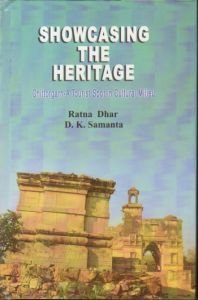
Showcasing the Heritage : Chittorgarh A Tourist Spot in Cultural Milieu Book
Contents: Foreword. Preface. 1. Introduction. 2. Locale. 3. Sacred places. 4. The hosts. 5. The services. 6. The tourists. 7. The network of management. 8. Showcasing the heritage. References.
The present book looks at tourism as a global impact and its consequences at the heritage site of Chittorgarh fort with its chequered history of bravery and supreme sacrifice. In this treatise the authors have drawn attention to the impact of tourism in the tourist spots and its role in sustainable development of the people. They intended to bring out the essence of tourism and its impact on the tourists as well on the host population.
In recent years India’s performance in tourism sector has been quite impressive. The tourism policy of India aims at making it a catalyst for employment generation, preservation of environment, development of niche areas and to promote India’s strength as an exciting tourism destination. During the last decade the state of Rajasthan has put much effort in projecting the state’s heritage and culture to the world and in 1989 tourism was declared an industry in Rajasthan. As a policy plan the Rajayon ki sthan, the land of kings and feudal, its vibrant colourful culture, the feudal legacy of forts and palaces, havelis, fairs and festivals the music and folklore are projected to the world.
In this book the authors based on their intensive fieldwork have systematically described the process of showcasing the heritage elements of the fort which are the source of income generation for the local populations. This is systematically achieved with the help of the government at the state as well as the local level. Chittor fort is a place of inspiration and a platform to revive the tradition of bravery, gallantry and supreme sacrifice for the Rajput community and for the people as a whole. The tourists come to this place to have a feel of Rajput heritage, johar of the brave women, myth and valour among the ruins of the fort. Here the myths, folklores and cultural objects create an imprint in the mind of the tourists. In this course the heritage materials have received large market for which auxiliary industries like hotel, resort, studio etc have come up and generated employment for the people. The tourists visiting the fort are the main resource for them.
This volume deserves the attention of the scholars of tourism management and the agencies associated with tourism interest as well as to the anthropologists other social scientists and planners. (jacket)