
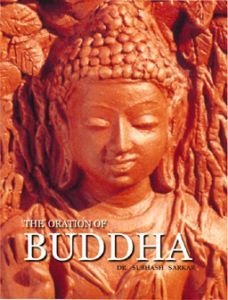
Oration Of Buddha Book
1. The book was bilingually composed during my stay in England when I was in England. It is an epic poem in about 8000 lines of verse, . Its lyrical emphasis on Lord Buddha’s socio-moral code, in preference to the metaphysical aspects of philosophy, was highlighted by many as a "work of great originality, "and both East and West looked forward to its transliteration into as many languages as possible. I had to wait till last July when a "Buddha-in-me-and-I-in-Buddha" feeling caused mounting pressure within me, and I consequently undertook its rendering in English verse. Since English is, in effect, a "central language" of the world, I aimed first to take it to the English-speaking world, so as to create a base for other languages to use it, and also to ensure its spread universally. This was undertaken with a special emphasis on a Japanese and Chinese version since both the countries at present, is perhaps the only countries most certainly taking total care of Buddhist philosophy and religion. I gather that Japan has about a dozen government and private universities, and a large number of schools as seats of learning in Buddhist studies so has China .
2. The English version contains 208 "Orations of Buddha" designed to address the world anew. The poems are integrated ones arranged in the form of a Trilogy i.e. it has three groups of poems complete in themselves, but with a common theme and these are in the following order:
I. Manifest Buddha: 4 chapters each in three sections each of which again has about 10-12 poems which have well-conceived titles totalling 140 poem-orations.
II. Resolve of Buddha: 42 poems in 4 sections, each with 10-11 poems.
III. In Admiration of Earth: 26 poems in 3 sections, each with 9-10 poems.
3. Each poem is based on a different facet of Buddhist teaching and when these are read singly or in groups, a true Buddha-Mind emerges. There are authentic annotations wherever necessary to explain the standpoints of Buddhist philosophy of the poems; these appear as foot-notes to facilitate simultaneous reading of both the literature and the philosophy. These two disciplines may be likened respectively to free oxygen in air and conserved oxygen in cylinders, to come to the aid of humanity in health and harness.
4. With great pleasure I extend my co-operation to any individual and institution who may render the work of translation of book in any other language I thank my Publisher Syed Mansoor who has given unstinting support in the making of the two versions of this book and is readily awaiting for the aforesaid proposal.
There is a wide potential for illustrations in Buddhist Art, since these poems are feature-based for the literature which seeks to encompass the history, the philosophy and the religion of Buddhism.
To be good, too good to darkness and Time seemingly fine -they raise regiments to suffer and make faces to see light upper along with rays the real hindrance to the illusive which it Light flays. 688