
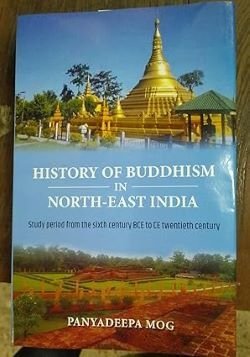
History of Buddhism in North-East India: Study Period from the Sixth century BCE to CE Twentieth Century Book
The present work, History of Buddhism in North-East India is an outcome of a long research and a part of the author's PhD work. It talks about Buddhism, both Theravada and Mahayana, covering the geographical range of North-East India in particular and the Indian subcontinent in general, period since sixth century BCE to CE twentieth century. Buddhism started with the Enlightenment of Gautama the Buddha in central India around 2600 years ago and it bloomed around twelfth century and spread out throughout India and beyond. The strength of the teachings of the Buddha continued up to thirteenth century then after which it gradually declined from the Indian soil for around five hundred years. Nineteenth century was the time for its revival with British Archaeological excavations in major Buddhist sites in India. Some significant personalities like Anagarika Dharmapala, Kripasaran Mahasthavir, B.R. Ambedkar, the fourteenth Dalai Lama and so on arose and contributed their respective parts in the restoration of modern Indian Buddhism. Kripasaran Mahasthavir played a crucial role in the dissemination of Buddhism in Bengal which strengthened the development of North-East Indian Buddhism somehow; especially Theravada Buddhism. North-East Indian Buddhism developed in multi- dimensional ways because of internal and external social factors.