
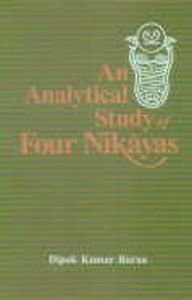
An Analytical Study of Four Nikayas Book
Contents: Foreword. Preface to the second edition. Preface to the first edition. I. The four Nikayas: 1. Probable time of compilation of the four Nikayas. 2. Nikayas and Agamas compared. 3. Language of the Nikayas. II. Discourse to the laity: 1. Introductory discussion. 2. Definitions of Gahapati and Upasaka. 3. Ethical. 4. Religious. 5. Secular discourses. 6. Jaina discourses compared. III. Discourses on Sila, Samadhi and Panna: 1. Introductory discussion. 2. Sila. 3. Samadhi. 4. Panna. IV. Discussions on secular matters –administrative, social and economic: 1. Origin of state. 2. Kingship. 3. Republican form of government. 4. Military administration. 5. Rural administration. 6. Caste. 7. Classes of people. 8. Slavery. 9. Marriage and position of women. 10. Offences and punishments. 11. General life. 12. Agriculture. 13. Industry. 14. Seaproducts. 15. Trade and commerce. 16. Famine. V. Historical and geographical materials in the Nikayas: 1. Anga. 2. Magadha. 3. Kasi. 4. Kosala. 5. Vajji. 6. Malla. 7. Cedi. 8. Vamsa. 9. Kuru. 10. Pancala. 11. Maccha. 12. Surasena. 13. Assaka. 14. Avanti. 15. Gandhara. 16. Kamboja. 17. Clans and peoples. 18. Conception of Jambudipa. 19. Physiography. 20. Divisions of India. 21. Physical features. 22. Places mentioned. Appendices: 1. Mutual relations of the four Nikayas. 2. Treatment of similes in the four Nikayas. 3. Brief contents of the Suttas in the four Nikayas. Select bibliography. Index to names. Index to subjects.
"The first four Nikaya-texts belonging to the Suttapitaka of the Pali Tipitaka which contains the sacred sayings of Gotama (Skt. Gautama) Buddha are of inextimable value since they provide important source-materials to study the religio-cultural history of the contemporary period. From the sociological point of view too they are of utmost significance, because they vividly present the daily life of the people of ancient India. Hence the importance of the Nikayas can neither be gainsaid nor exaggerated. In fact, this work contains an outline study of the four Nikayas, namely Dighanikaya, Majjhimanikaya, Samyuttanikaya, and Anguttaranikaya, which belong to the Theravada Pali Canon, on some select aspects in five chapters and three appendices treating of the age of the Nikayas, comparative study between the Sanskrit/Chinese Agamas and Pali Nikayas, their language, Buddha’s discourses to the laity, teachings of early Buddhism under the threefold division of Sila, Samadhi and Panna, discussions on administrative, social and economic conditions of ancient India, historical and geographical materials found in the Nikayas, mutual relations of the treatment of similes in these texts. It also includes brief contents of the Suttas of those Nikayas. In the present work, on the whole, an attempt has been made to introduce the first four Nikaya-texts in their entirety." (jacket)