
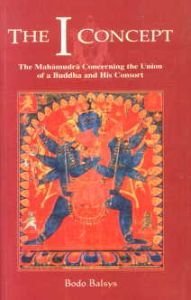
The I Concept : The Mahamudra Concerning the Union of a Buddha and His Consort, Vol. II Book
Contents: Preface. 1. The rules of interpretation of sacred scriptures. 2. The two truths. 3. The west and the east, the Mahamudra of the two truths. 4. The seven fold reasoning — Part A: the introduction. 5. Essay on the many and the one, (From Jnanagarbha’s commentary on the two truths). 6. The refutation of partless particles. 7. The seven-fold reasoning — Part B: the probandium. 8. Dependent origination. 9. The diamond slivers. 10. The non-production from other. 11. The four extremes. 12. The four alternatives and refuting a self of persons. 13. The seven cornered reason. 14. The Pudgala doctrine. 15. Enquiry into the nature of “Self”. 16. The soul concept and the Tathagatagarbha doctrine. 17. Negating the “Self”. 18. The river Simile. 19. On the evolution of consciousness. 20. Signposts of consciousness. 21. Commentary on Alayavijnana as seed. 22. The nature of light. 23. The examination of time in the Mulamadhyamakakarika. 24. Sunyata, consciousness, and Parinirvana. 25. Voidness and abundance. 26. The great Gates of Diamond Liberation Part I: Mara, Secret Mantra, and Dependent Origination. 27. The Great Gates of Diamond Liberation Part II: considerations of the heart center. 28. The Great Gates of Diamond Liberation Part III: The Centres below the Diaphragm and Voidness. 29. A concluding note on emptiness. 30. The Buddha and the soul concept. 31. The Vijnanavadins on the existence of “Self”. 32. The Sambhogakaya flower. 33. The Uttaratantra of Maitreya and the Sambhogakaya flower. 34. The Vijnanavadins on the evolution of consciousness. Bibliography. Index.
“At last, the theory of relativity for Buddhism. This scintillating work, the second of a series, titled “Unveiling the Esoteric in Buddhism”, seriously challenges the thinking concerning many conventionally accepted ideas about the nature of the content of Buddhist scriptures. The opinions of what Buddhists believe concerning the great majority of their sutras and Tantras will change in the light of the many revelations presented in this series of works, the central pillar of which are the syllogisms presented in The I Concept.
Scholars will find that there are strata of thought in the literature they have not even conceived of as existing. This will allow them to better understand the nature of that which has always been considered “ear whispered”, orally transmitted from the enlightened guru to the worthy student, because as well as the secret doctrines relating to their particular ideological stream, the context of the material differs from that which is normally (conventionally) accepted as correct.
This ground-breaking seminal work is set to become a milestone in the history of the evolution of the Buddha Dharma. It is intended as a panacea for those who perceive Buddhism to be in a period of malaise, despite the vast number of new publications, because of the lack of genuinely enlightened preceptors of the dharma that exist today. The information in The I concept will reveal why Buddhism lacks the enlightened, that the present fallacies taught and accepted as dharma today actually prevents enlightenment from occurring. The dharma therefore needs rectifying, for to present the truth of what actually is. Veridical ascertaining of truth is really what the Buddha Dharma ought to be about, and such dharma will be positively ascertained by the readers of The I Concept and this series of works.” (jacket)